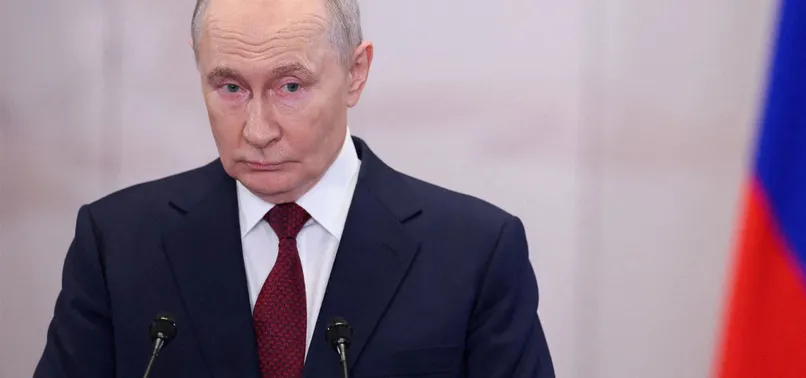
Russian President Vladimir Putin said Tuesday that Moscow's response to Ukrainian attacks on Russian oil refineries was inevitable.
Speaking at a meeting on the development of Russia's fuel and energy sector in Moscow, Putin said Kyiv continues the strikes despite a request from US President Donald Trump to stop.
"The Kyiv regime does not stop attacking our oil refining facilities, despite the appeal and direct request of the US president to refrain from these attacks," said Putin.
"Therefore, I would like to note that retaliatory actions on our part are inevitable. Everyone should know this," he added.
Putin said the escalation initiated by Ukraine in early June was intended to last 40 days and would not inflict critical damage on Russia.
He urged additional measures to strengthen the security of oil refineries and protect their employees.
On the domestic fuel market, Putin said Russia maintained stable fuel supplies to consumers and businesses despite difficulties, including seasonal demand from agricultural producers.
He said the government increased fuel production, built up reserves and adjusted logistics chains, while restricting exports of gasoline, jet fuel and diesel.
Following price peaks in early October, gasoline prices generally stabilized in most Russian regions, he said, acknowledging that the domestic petroleum products market remained challenging.
Turning to international energy markets, he criticized European efforts to restrict imports of Russian energy resources, saying such measures would create more problems for European countries.
"Less of our oil and gas will reach them, while they will have more problems," he said, adding that Russia had never restricted energy supplies to anyone and that European leaders had made such decisions themselves.
Moscow would seek to expand its export markets and deepen cooperation with "predictable and responsible partners," he said.
He also urged developing new energy supply routes, including the Trans-Arctic Transport Corridor, particularly the Northern Sea Route, which he said could reduce cargo delivery times to partners by 1.5 to two times and significantly lower logistics costs.
Putin said Russia needed to expand domestic shipbuilding capacity, including the production of ice-class cargo vessels and icebreakers, to utilize the route's potential fully.
He also urged expanding transport infrastructure in Siberia and the Far East to meet growing demand from Asian partners, as well as developing oil refining and petrochemical industries in eastern Russia.


