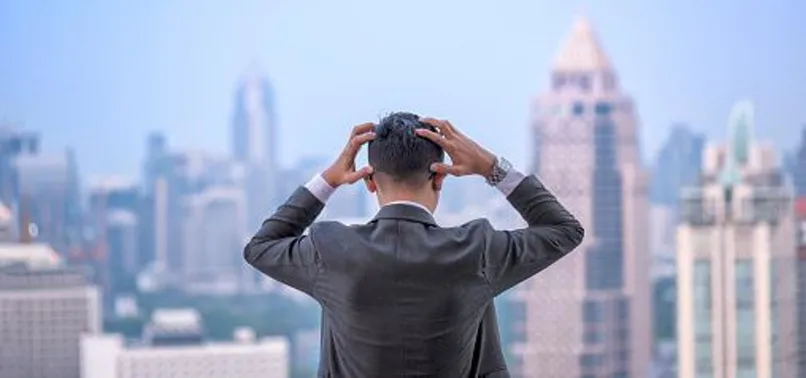
Rising cases of chronic stress could be down to a mismatch between modern living and our own biology, according to a new study.
Colin Shaw from the University of Zurich in Switzerland and Daniel Longman from Loughborough University in the UK.
They pulled together a wealth of evidence that suggests our biological evolution is being outpaced by rapid technological and environmental transformations.Daily lives filled with triggers that put us slightly on edge, from overflowing inboxes to construction noise to work deadlines, are combining to put our bodies on alert around the clock – something that hasn't been the case for much of human history.
"In our ancestral state, we were well-adapted to deal with acute stress to evade or confront predators," says Shaw. "Fight or flight. The lion would come around occasionally, and you had to be ready to defend yourself or run.
"The key is that the lion goes away again. Such an all-out effort guaranteed survival, but it was very costly and required lengthy recovery."
All these different stressors from artificial light to microplastic exposure combined with more sedentary lifestyles, are adding up to damage our health in a variety of ways, explain the researchers in their paper.
"Whether it's a difficult discussion with your partner or your boss, or traffic noise, your stress response system is still pretty much the same as if you were facing lion after lion after lion," says Shaw.
Multiple studies have shown that spending time in nature – or even just looking at photos of nature – can improve physical and mental health. In evolutionary terms, being outdoors in nature is still where human beings want to be.
And that gives us some clues as to what to do about dealing with the issues raised by this review. Shaw and Longman want to see more done to preserve green areas in urban environments, to protect the natural landscapes we have left, and to provide spaces where people can actually switch off.
"Our research can identify which stimuli most affect blood pressure or heart rate and pass that knowledge on to decision-makers," says Shaw.
"We need to get our cities right – and at the same time regenerate, value and spend more time in natural spaces."


