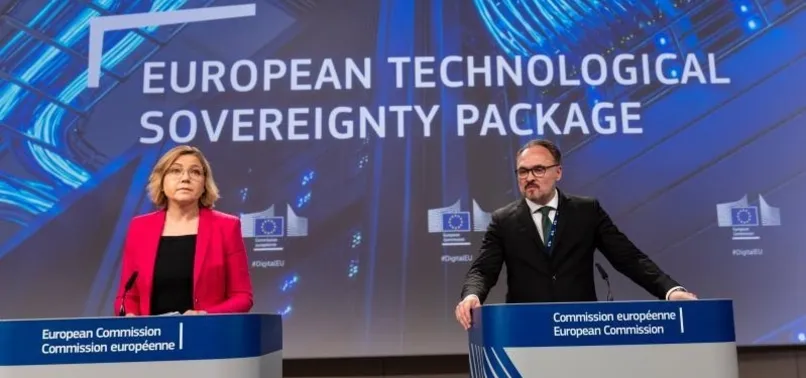
The European Commission on Wednesday proposed a new Quantum Act and the establishment of a Sovereign Tech Equity Fund (STEF) to strengthen Europe's industrial capacity, technological sovereignty and security.
The proposed legislation aims to accelerate the development and commercialization of quantum technologies, strengthen supply chains and prepare Europe's digital infrastructure for the cybersecurity risks posed by future quantum computers, according to a statement.
The commission said the Quantum Act would focus on three main pillars: research excellence, the deployment of quantum technologies and the security of systems and supply chains.
The initiative will bring together EU and national programs under the Quantum Europe Framework Initiative, while improving access to financing, shared research infrastructure and specialized support services.
The proposal also aims to accelerate Europe's transition to post-quantum cryptography to protect data, communications and critical infrastructure against future cyber threats.
The legislation would support the development of pan-European quantum infrastructures, including quantum computers, simulators and quantum-enhanced medical imaging facilities.
On security, the commission proposed closer cooperation with member states to monitor supply chains, identify critical suppliers and components, and reduce vulnerabilities.
The bloc would also work with international partners to strengthen supply-chain resilience.
The commission said it would work with the European Investment Bank Group, member states and other stakeholders to establish the fund.
The proposal will now be considered by the European Parliament and the European Council.
According to the strategy published in 2025, the EU and its member states have committed more than €11 billion ($12 billion) in public investment in quantum technologies, including research programs, secure communications networks and a European network of quantum computers.


