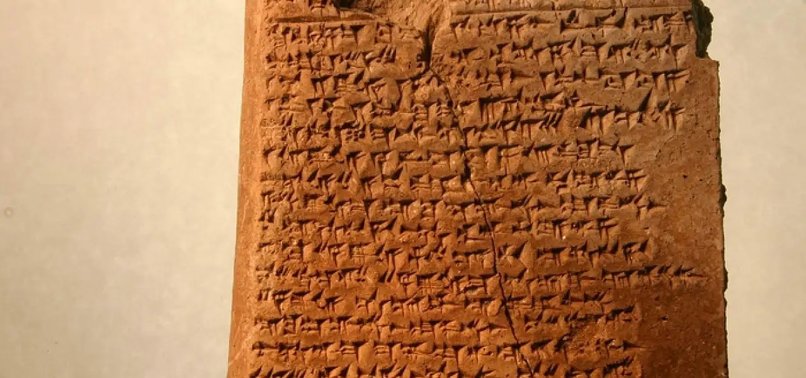
The Kültöbe Inscription, dating back to the 9th-10th centuries and associated with the Oghuz Turks, has been discovered near the city of Turkestan in Kazakhstan.
Associate Professor Hayrettin İhsan Erkoç, who narrated the story of the inscription's discovery, mentioned it was found in a village school:
"We discovered the Kültöbe Inscription in Orangay village near Turkestan city in Kazakhstan, which encompasses the ruins of an Oghuz settlement named Kültöbe. When we learned that there was a small museum inside the village's secondary school, we decided to visit it. While touring the museum, we stumbled upon the inscription by chance. After an extensive literature review and finding no prior scholarly work done on the inscription, we decided to study and contribute it to the academic literature."
"We estimate that the inscription dates back to the 9th-10th centuries. Archaeological work done by our Kazakh colleagues suggests that the Oghuz Turks arrived in this region in the 9th century and largely migrated away at the beginning of the 11th century, hence we proposed this date range. Of course, further analyses will provide a more precise date."


