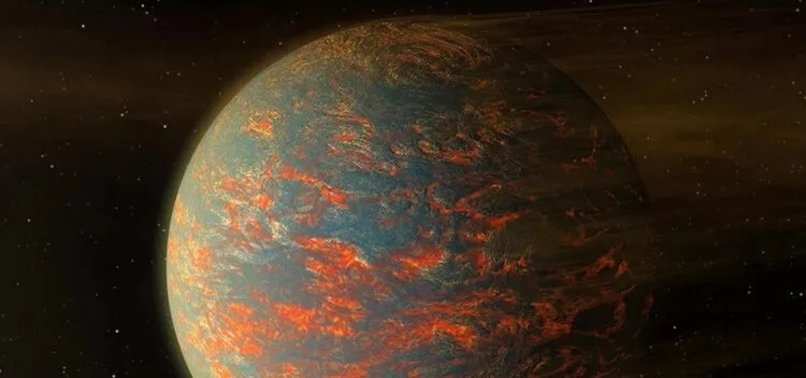
In 1992, the first two planets were discovered orbiting a pulsar, and in 1995, the first exoplanet around a main-sequence star was found. The number rapidly increased with NASA's Kepler and TESS missions. In 2015, Kepler's 1,000th exoplanet was confirmed, and in 2016, nearly 1,500 discoveries were made in a single year.
In March 2022, the number reached 5,000. As of September 2025, this number has risen to 6,000. The discovered exoplanets show a diversity that resembles no planets in our Solar System.
Hot Jupiters: Giant gas planets that orbit very close to their stars, completing an orbit in just a few days. Ultra-short-period planets: Planets that complete an orbit in only a few hours. Tidally locked worlds: Planets where one side is constantly scorched while the other is freezing.
Unusual atmospheres: Planets where iron might rain, or which are as light as foam or covered in toxic gases. This variety gives us clues about planet formation processes and the possibility of habitable, Earth-like worlds.
Most discoveries are made using the transit method, which measures the decrease in a star's brightness as a planet passes in front of it. Approximately 4,500 discoveries have been made using this method. The radial velocity method, which observes the slight wobble of a star, has yielded around 1,140 discoveries. Fewer than 100 planets have been directly imaged so far.
TESS is still identifying thousands of candidate planets. The Nancy Grace Roman Space Telescope (2027) will find thousands of new planets using the microlensing method. ESA's PLATO mission (2026) will search for rocky planets around Sun-like stars. Although the Habitable Worlds Observatory is still in the proposal stage, it aims to study worlds in habitable zones. China's Earth 2.0 telescope (2028) will search for Earth-like planets for four years.


