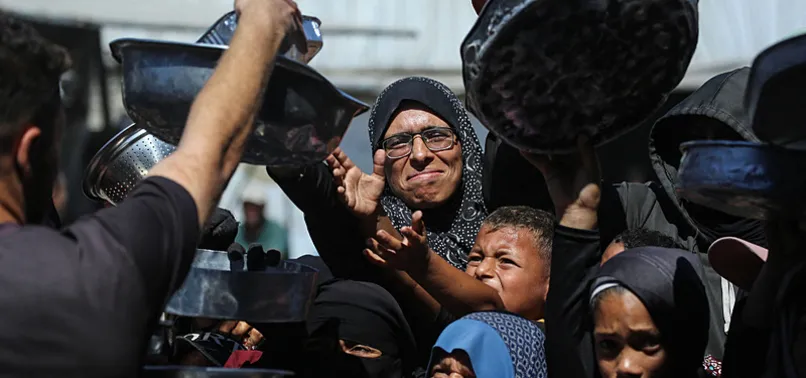
The UN World Food Program (WFP) chief Luke Lindberg said Wednesday that the hunger situation in the Gaza Strip is "unacceptable" as he pledged to defend his staff against attacks.
Speaking at a news conference at UN headquarters in New York, Lindberg said that "there is a very serious need" in Gaza, citing funding cuts as a major constraint on the agency's work.
Asked how he would address Israeli troops firing on WFP convoys, given his White House connections, Lindberg said staff security is "the number one concern for me."
"I will absolutely stand up for our employees, no matter where on Earth they are located," he said.
He added that "if anywhere in the world there are people attacking humanitarians, I will absolutely do what I can to protect them from violence against them and their families."
Outlining his priorities, Lindberg said: "First and foremost, it is protecting and empowering our staff members. Humanitarians have been killed all over the world in the past two years, at unprecedented levels, and it's unacceptable."
"Over 700 people in the last few years have been killed trying to save other people's lives, and nobody should lose their life trying to save somebody else's," he added.
Asked about the WFP's partnership with the US, which backed his candidacy, Lindberg said the "United States plays a critical role. It is the largest funder for the World Food Program."
"When I was nominated for this role by the United States, President (Donald) Trump personally called me," he said. "I have a great relationship with many members of the Trump administration."
Lindberg stressed the need for broader donor support. "There is no one nation, no one entity that can do this alone. We have to do it together," he added.


