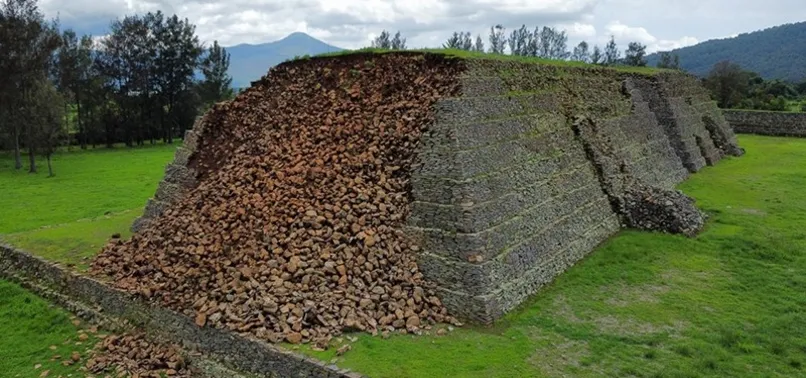
The pyramid, located in the Ihuatzio Archaeological Zone, was one of the best-preserved remnants of the P'urhépecha Kingdom, the only empire never conquered by the Aztecs. The P'urhépecha culture still survives today.
Mexico's National Institute of Anthropology and History (INAH) blamed recent extreme weather, noting that intense heat followed by drought created cracks in the structure, allowing water to seep in and making collapse inevitable.
Post-collapse inspections revealed damage to six levels of the pyramid, including its outer wall, core, and support structures. A second pyramid at Ihuatzio remains intact for now.
The incident mirrors the recent collapse of Utah's iconic "Double Arch" rock formation in the U.S., with experts warning that both events highlight the devastating impact of human-driven climate change on cultural and natural heritage worldwide.


