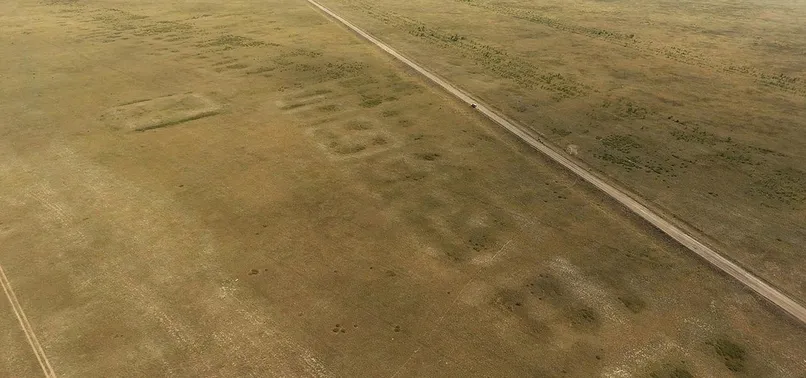
Named Semiyarka, this city is over 3,500 years old, making it the largest planned settlement discovered in the region to date.
The international research was conducted through a collaboration between University College London (UCL), Durham University, and Toraighyrov University, with the findings published in the journal Antiquity.
The excavated structures consist of multi-roomed houses situated on two rows of rectangular earth mounds. At the center, remains of a building twice as large as others were found, likely serving as a ceremonial area, a community structure, or a residence for a powerful family.
Dr. Miljana Radivojević, the lead author of the study, emphasized the significance of the findings:
"Semiyarka is changing our views about the steppe communities. It demonstrates that societies we traditionally thought of as nomadic had the capabilities to establish permanent and planned cities."
Researchers identified an industrial area dedicated to bronze production from a tin-copper alloy in the southeast of the city. They found crucibles, slag, and bronze artifacts, indicating the operation of large-scale metallurgical systems. These discoveries provide the strongest evidence yet of bronze production in the Eurasian steppes. Previously, only another later-period settlement called Askaraly was associated with tin production.
The settlement is located on an elevated point along the Irtysh River and derives its name from the surrounding "Seven Valleys" (Semiyarka). Due to its location, it is believed to have been both a regional power and a trade hub. The city's proximity to copper and tin deposits in the Altay Mountains likely supported its industrial activities.
Findings suggest that the settlement was predominantly inhabited by the Alekseevka-Sargary culture. Other artifacts indicate trade connections with the Cherkaskul people.