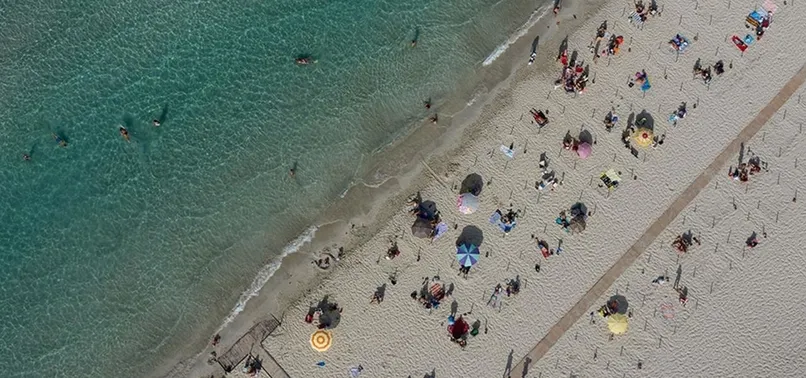
Scientists warn that global climate change and intensive human activity along coasts are causing rapid loss of beaches worldwide, with nearly half of the world's coastlines potentially disappearing by the end of the century.
Prof. Omar Defeo, a marine scientist at the University of the Republic in Uruguay, said: "By the end of the century, almost half of beaches will be gone. Uruguay, Brazil, and Argentina share these resources, so we must work together to manage and protect coastal ecosystems."
Rising sea levels and rapid coastal urbanization are triggering a process called "coastal squeeze," which disrupts the natural balance across three connected areas: sand dunes, beach surfaces, and the wave-breaking zone.
When the two-way cycle—where wind carries sand from dunes to the shore and waves return it—is broken, storm surges become more destructive. Prof. Defeo warned: "Dunes act as buffers. When urbanization destroys them, the result can be the collapse of beachfront homes."
A study along 30 beaches in São Paulo by Prof. Defeo and Brazilian researchers found that population density and increased visitor numbers reduce species diversity and biomass. Construction on dunes and mechanical cleaning of beaches also severely damage ecosystems.
The research noted that while organism numbers may rise in some coastal areas, these are opportunistic species feeding on human-generated organic waste, not natural species.
Another study published in Marine Science examined 315 beaches and found that one-fifth are experiencing severe erosion, driven primarily by rising seas, wind and wave dynamics, and human impacts.
Prof. Defeo emphasized: "Human activity plays a key role, especially on steep beaches and transitional types where wave energy is suddenly dissipated. International cooperation is essential to protect coastlines."
Scientists warn that without protection, coastal regions will face rapid economic losses, biodiversity destruction, and increased disaster risks for coastal cities.


