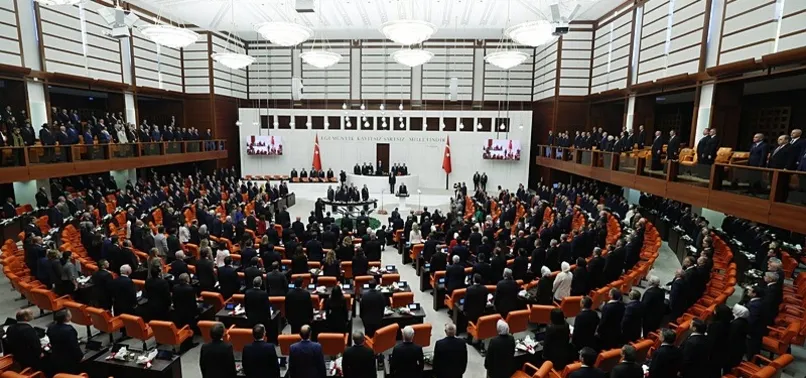
The Turkish parliament passed legislation Thursday establishing procedures for the liquidation of certain investment funds and the recovery of assets unlawfully removed from their portfolios.
The law applies to funds ordered liquidated by the Capital Markets Board of Türkiye (CMB) on Sept. 17, whose liquidation had not been completed by the law's publication date.
Under the legislation, liquidation will be carried out by designated institutions under the supervision of the CMB, with proceeds added to the funds' liquidation assets after necessary expenses are deducted.
The law allows interim payments of up to one million Turkish liras ($20,150) to eligible investors in funds designated by the CMB, subject to their net investment amounts and other conditions.
Investors whose net investment amounts are below one million liras may receive payments up to those amounts, while payments to those with higher balances will be capped at one million liras.
Individuals and institutions found by the CMB to have engaged in specified market abuse, insider trading or market manipulation involving the affected funds will be barred from receiving payments from their liquidation assets or recovery accounts.
The legislation makes portfolio management companies that established or managed the funds primarily responsible for losses, with other parties held liable under specified conditions if the losses cannot be recovered from those companies.
The Savings Deposit Insurance Fund (SDIF) will be authorized to pursue the recovery of losses from responsible parties identified by the SPK and may be appointed as trustee over certain assets.
Assets seized or confiscated in connection with the affected funds may be returned to the funds or transferred to recovery accounts under the procedures set out in the law.
Recovered funds will be distributed to investors through designated liquidation institutions or, where liquidation has been completed, through the Investor Compensation Center (ICC) in proportion to their fund holdings.


