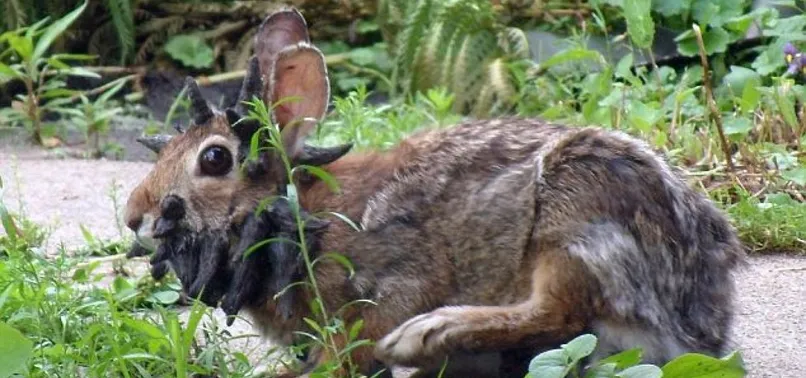
The Colorado Parks and Wildlife Department (CPW) announced that the infection typically appears as black nodules on the rabbit's head and can grow over time to take on a horned appearance. While the virus generally doesn't threaten the rabbits' lives, it can become dangerous if it grows large enough to prevent them from eating or drinking.
One witness described a rabbit she saw, saying it "looked like it had black sticks growing out of its mouth," and noted that the growths had gotten bigger when the rabbit reappeared the following year after surviving the winter.
The virus can only be transmitted to rabbits, but domestic rabbits that live outdoors can also become infected. The disease is more severe in domestic rabbits and requires veterinary intervention. The CPW stated that there is no cure for the virus, but most infected rabbits recover over time. For this reason, they only recommend euthanasia for animals whose ability to eat is impaired.
Officials also warned against touching infected rabbits.


