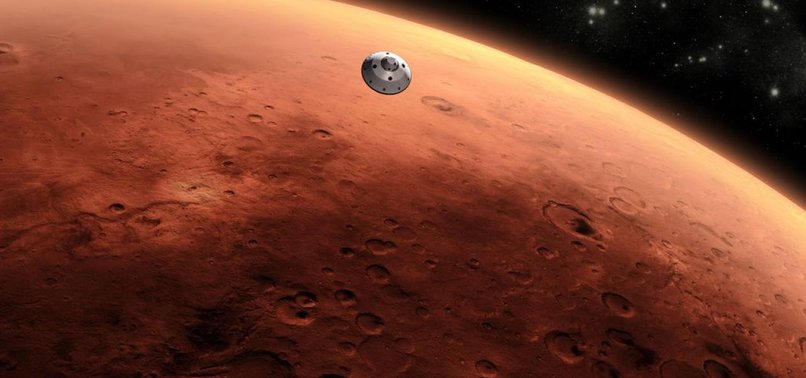
M-MATISSE (Mars Magnetosphere ATmosphere Ionosphere and Space-weather SciencE) plans to send two robotic orbiters to Mars. These spacecraft will examine the planet's magnetosphere, ionosphere, and thermosphere, as well as near-surface atmospheric conditions and radiation levels.
If approved, M-MATISSE will become the first dedicated mission to investigate Mars' space weather across all atmospheric layers.
According to Dr. Beatriz Sánchez-Cano of the University of Leicester, the mission will reveal how solar energy and particles are absorbed by the Martian atmosphere and how they influence surface processes—critical knowledge for anticipating and mitigating radiation hazards in future crewed missions.
"Understanding space weather conditions on Mars is vital for both robotic and human exploration," Dr. Sánchez-Cano said. "Our experience monitoring space weather on Earth shows how crucial it is to be prepared for these kinds of dangers."
The two spacecraft in the mission are named Henri and Marguerite. Henri will operate within Mars' plasma system, while Marguerite will monitor regions farther out, where the solar wind's influence is more intense.
This dual-orbiter strategy will allow simultaneous observations of solar wind effects on Mars' atmosphere from both near and far distances. It will provide new insights into how the Martian atmosphere evolves and what conditions may contribute to its habitability.
M-MATISSE is currently one of three candidates being considered under ESA's medium-class mission program. A final decision is expected by mid-2026.
If selected, the United Kingdom will be responsible for all particle measurement instruments and the mission's scientific data management center—making it possible to conduct the most sensitive ion, neutral, and electron measurements ever taken on Mars.


