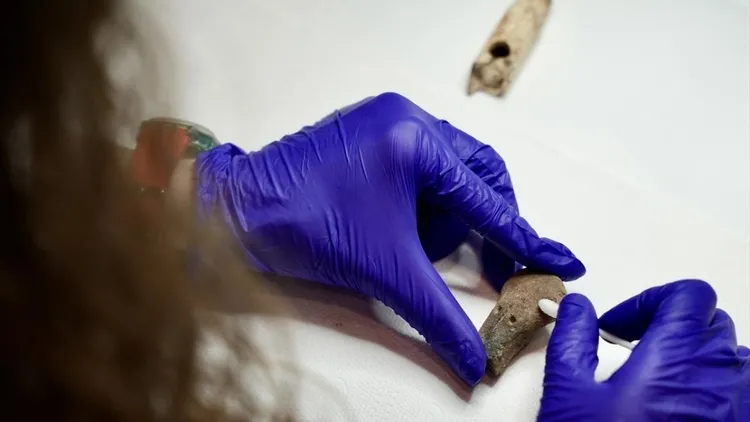
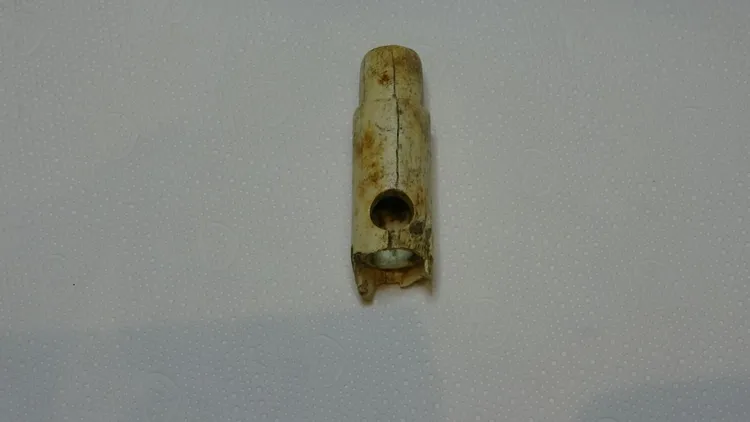
In the excavation, a 4,500-year-old human-shaped idol head was also brought to light. Head of Troy Ancient City Excavation, Prof. Dr. Rüstem Aslan, made a statement about the finds.

Aslan, especially underlining that the bone flute finding in the layer belonging to the 8th century BC was a first for the 160 years of Troy excavations, continued: "For the first time in the excavation history of Troy, a bone flute instrument appeared. The second find is an idol head, a cult object, found within a fire layer inside the city entrances of the 2nd city of Troy, which we define as the Early Bronze Age. Especially the number of similar finds during the 160 years of Troy excavation for this finding is 3-5. Finding it within the layer provides us with important data for the excavation history of Troy."

Referring to the Odyssey film, Aslan noted: "Especially in the 'Song of the Sirens' section, we know that during the experimental film preparations, that music was made with a flute belonging to the 8th century. In this year's excavations, we found a similar flute piece from that period. It is an interesting coincidence from the perspective of excavation history. From the perspective of Homeric experts, Homer is accepted to have lived in the 8th century. Many researchers accept that he put the epics into writing in the 8th century. In this respect, the musical instruments described in the epic, the events described in the epic, and our finding a similar artifact in Troy in the Archaic Period, in an 8th-century layer, is quite important."