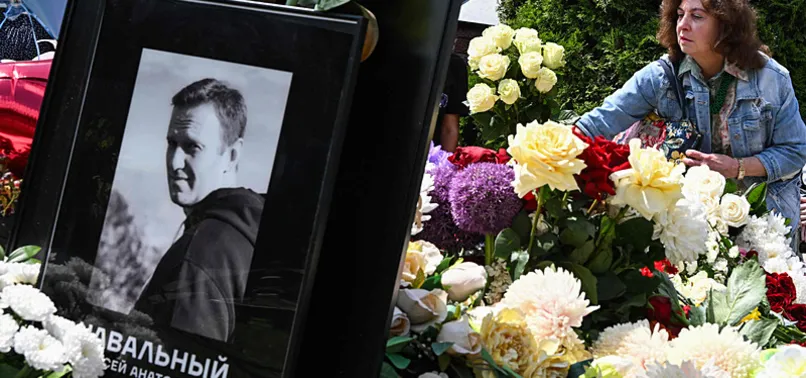
The European Union on Friday imposed sanctions on six Russian individuals over their alleged involvement in the development of chemical weapons linked to the poisoning and death of Russian opposition figure Alexei Navalny.
In a statement, the European Council said the restrictive measures target scientists and researchers working in Russia's military and chemical research sectors who were involved in the development of epibatidine, a highly toxic substance.
According to the EU Council, traces of epibatidine were found in samples taken from Navalny's body following his death in a Russian penal colony in February 2024, leading investigators to conclude that poisoning with the toxin was highly likely the cause of death.
Among those sanctioned is Igor Babkin, head of a laboratory at the Signal Scientific Centre, where research on the synthesis of epibatidine was conducted and published.
The sanctions list also includes Irina Derevyagina, a chemical research analyst at Russia's State Research Institute of Organic Chemistry and Technology, which the EU described as a "central" institution within Russia's chemical weapons program.
Mikhail Gutsalyuk, head of the department for organizing scientific work and preparing scientific and pedagogical staff at the Military Academy of Radiological, Chemical and Biological Defence, was also designated.
With the latest measures, EU sanctions related to the use and proliferation of chemical weapons now apply to 31 individuals and 6 entities.
Those subject to the sanctions face asset freezes, while EU citizens and companies are prohibited from making funds or economic resources available to them, directly or indirectly.
The listed individuals are also banned from entering EU territory.


