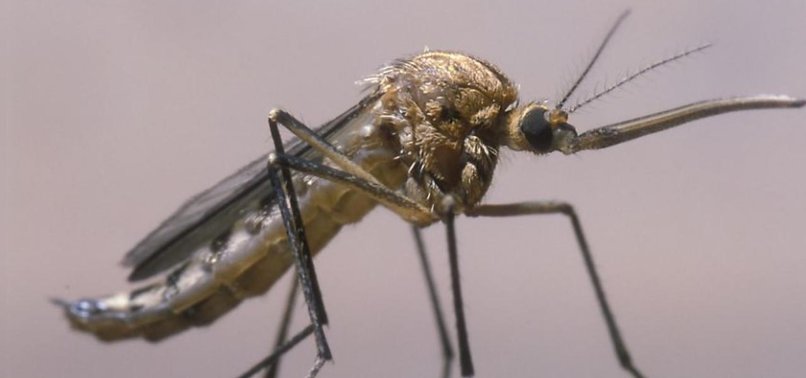
The U.S. is working on an interesting solution to a serious biological threat approaching its border with Mexico: producing millions of flies and releasing them from airplanes.
While this might sound like a disaster scenario, the plan is seen as an effective defense against an infestation of carnivorous larvae that threatens to wipe out the cattle industry. The danger comes from the larvae of a fly species called Cochliomyia hominivorax, also known as the New World screwworm.
These flies lay eggs in the open wounds of living animals, particularly cows, horses, and pets.
The eggs hatch within 12–24 hours, and the emerging larvae feed on the animal's living tissue, causing deep and fatal wounds. If left untreated, an animal can die within one to two weeks.
This harmful species has spread since 2023 through Panama, Costa Rica, Honduras, Guatemala, Nicaragua, Belize, and El Salvador. Its arrival in southern Mexico in November 2024 raised alarm at the U.S. Department of Agriculture (USDA). Livestock trade ports along the border were shut down.
The U.S. is reviving an old but effective method to combat this infestation:
Sterile male flies will be produced, released from airplanes, and allowed to mate with wild females to produce unfertilized eggs. Since females mate only once, this method gradually eradicates the fly population over time.
The U.S. successfully used this strategy in the 1960s and 70s. Today, there is only one production facility in Panama that can produce 100 million sterile flies per week. However, much more is needed to control the outbreak.
On June 18, the USDA announced the establishment of a new fly production facility near the U.S.-Mexico border. The production will take place at Moore Air Force Base. The first phase of the project is estimated to cost $8.5 million, but the total cost could reach $300 million.
In addition, an old facility in Mexico is set to be renovated with a $21 million budget, aiming for completion by the end of 2025.
Stephen Diebel, Vice President of the Texas Cattle Raisers Association, defended the plan, saying, "The economic damage caused by these flies could be $10 billion. A $300 million investment is a reasonable trade-off."
According to entomologist Dr. Phillip Kaufman, unlike other flies in the Western Hemisphere, this species attacks living tissue, not dead tissue. The larvae feed by piercing live tissue with sharp jaw hooks. After completing their development, they burrow into the ground and transform into adult flies.
Sterile flies are sterilized by exposure to gamma radiation during the pupal stage. These flies are then loaded into aircraft in climate-controlled containers and released over rural and sparsely populated areas. These flies do not pose a threat to humans or cities.
In addition to livestock, wild animals such as deer, birds, and rodents can also be affected by the infestation, complicating tracking efforts. To date, 83% of the reported 35,000 cases have been found in cattle.
The U.S. also plans to reopen livestock trade gates in Arizona, Texas, and New Mexico, which were closed earlier this year. Authorities say that fly control efforts in Mexico have been successful. However, since the danger is not entirely gone, a long-term strategy is being developed with the support of COPEG (U.S.-Panama Screwworm Fight Commission).


