Türkiye is among the countries that have used unmanned aerial vehicles most effectively, most intensively, and perhaps in the most distinctive way, especially over the past decade.
It is no secret that although unmanned aerial vehicles have been used worldwide for many years, Ankara deployed them in the field with its own unique doctrine, particularly during operations in Syria, and that this helped trigger a global transformation.
At the point reached today, one of the most critical turning points for the future of unmanned aerial vehicles is the potential missions these platforms will carry out alongside manned aircraft.
Although this may sound simple at first, it actually points to an extremely complex and challenging process.
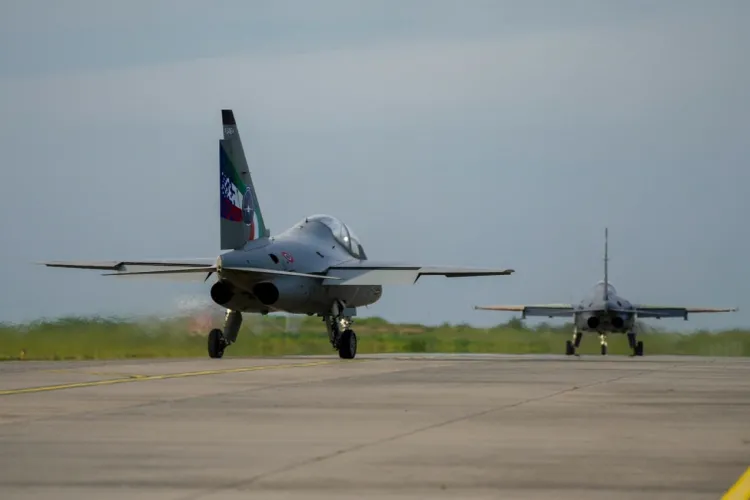
As will be remembered, BAYKAR and Italy's Leonardo recently carried out a significant flight. Türkiye's unmanned combat aircraft KIZILELMA conducted a joint flight with Italy's manned M-346 fighter aircraft.
During this test, KIZILELMA took off from the runway and autonomously approached the M-346 fighter jet. The pilot in the Italian aircraft then took control of KIZILELMA and issued commands. Türkiye's first unmanned combat aircraft, KIZILELMA, successfully carried out the pilot's instructions. After completing tasks such as changing position, breaking formation, and rejoining, KIZILELMA autonomously landed on the same runway from which it had taken off.
The KIZILELMA-M346 flight, which has gone down in history as one of Türkiye's demonstrations of capability, is of course not the only effort in this field.
Another prominent unmanned system at this point is ANKA-3, developed by TUSAŞ engineers. When it enters service, this platform is expected to make very serious contributions to Türkiye's air power and is in fact ideally suited for missions alongside manned aircraft.
As is known, work is continuing rapidly on KAAN, the fifth-generation fighter jet that represents one of the biggest challenges for the Turkish defense industry. ANKA-3 is expected to enter service next year. The emerging picture suggests that when KAAN takes to the skies, ANKA-3 will also be fully ready in every sense.
It is known that TUSAŞ has been conducting various trials to use its manned and unmanned systems together. One of the first examples that comes to mind is the first ANKA-3 prototype carrying out certain joint missions with HÜRJET. In the near future, it is seen as almost certain that KAAN will also test different formations in the sky with ANKA-3.

As the process advances further and joint flights become a reality, it is expected that a historic new era in Turkish aviation will be fully ushered in, with numerous KIZILELMA or ANKA-3 aircraft clustered around a manned fighter jet.
It is also being discussed that at this point Ankara may not limit itself to KAAN alone, but could also incorporate all of its manned combat aircraft into the equation, including HÜRJET, HÜRKUŞ, and even F-16s equipped with the ÖZGÜR software.