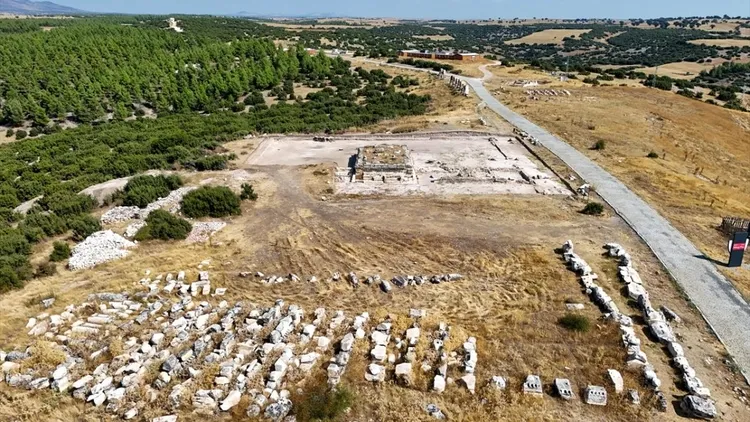
A wall about 250 meters long has been discovered at the ancient city of Blaundos in Ulubey district of Uşak, surrounding the North Temple and containing remains dating back to the Hellenistic period.

The ancient city, where soldiers arriving from Macedonia settled during Alexander the Great's campaign in Anatolia, is also known as a "garrison city."

The ancient city, where soldiers arriving from Macedonia settled during Alexander the Great's campaign in Anatolia, is also known as a "garrison city."

Blaundos also draws attention for its natural fortress-like appearance, as it is surrounded on three sides by the deep valleys formed by Ulubey Canyon and has only one entrance.

At the ancient city, which has hosted many civilizations throughout history, visitors are first welcomed by restored aqueducts located about 500 meters from the main entrance gate.

About 200 meters from the main entrance stands the North Temple, considered one of the most important structures in the ancient city.
Excavation work at Blaundos Ancient City, which began in 2018, is being carried out year-round under the "Heritage for the Future Project" under the direction of the Uşak Museum.

Archaeological excavations at the North Temple, which began last year and continued this year, have uncovered a large part of the temple's foundation.
İlhan Çavuş, director of the Uşak Museum and head of the Blaundos excavation, said the work is being conducted in the temple's temenos, an area closed to public use.

Çavuş said this section was built for priests and noted that excavations uncovered wall remains older than the temple itself, surrounding the sacred area.
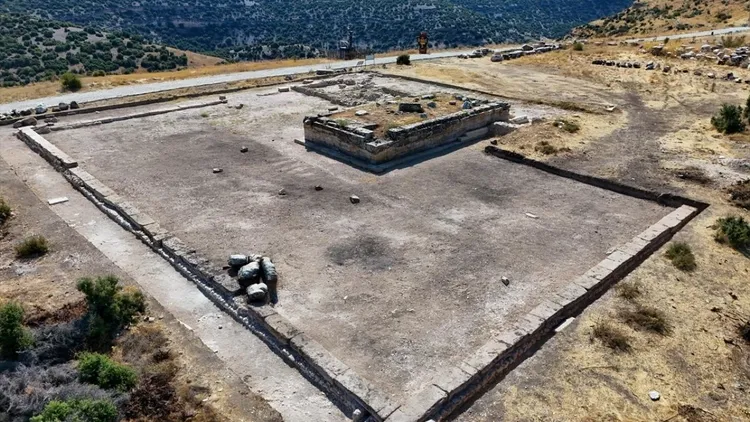
He said the entire wall has now been revealed, that it surrounds the temple in a rectangular shape, and that foundation excavations also uncovered traces from the Hellenistic period.